
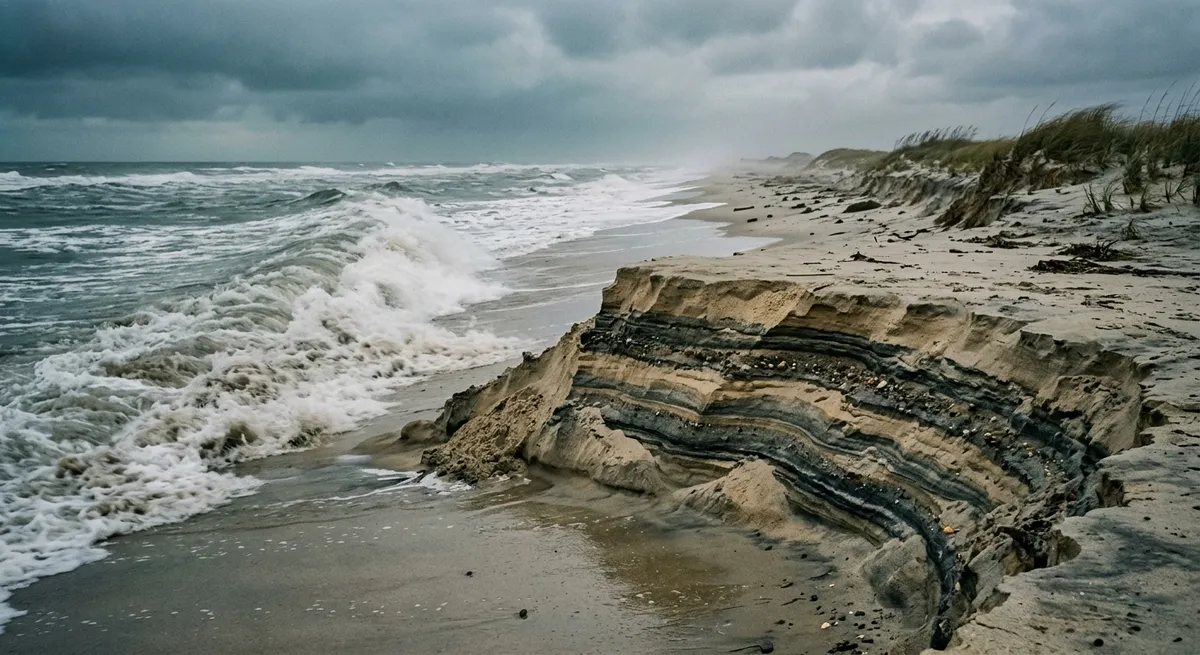
Recent research from Rutgers University has revealed a concerning trend: damaging coastal storm conditions at North Beach on Sandy Hook, New Jersey, are now occurring about twice as frequently as they did in 1979. This finding is not just an alarming statistic; it has profound implications for coastal communities already grappling with rising sea levels and increased flooding risk.
Understanding the Findings
The Rutgers team used innovative techniques, examining buried sediment layers and employing computer modeling, to reconstruct over 40 years of storm impacts at the beach. Their analysis has shown that the frequency of storm conditions capable of causing significant coastal erosion has nearly doubled in this time span. This increase highlights a growing concern amid shifting climate patterns, making it essential for communities to understand the underlying factors at play.
The Role of Geological Memory
One of the standout elements of this research is the use of what scientists term "geological memory." By studying sediment layers, researchers can piece together a history of storm activity without needing decades of continuous monitoring. This method acts as a time capsule, revealing insights that can inform both current and future coastal management strategies.
Erosion-Capable Storms vs. More Frequent Storms
It’s crucial to differentiate between a simple increase in storm events and an increase in damaging, erosion-capable storms. The combination of specific factors such as wave height and water level determines whether a storm will cause significant erosion. The doubling of storm conditions might not just indicate a more stormy future but suggests an alarming increase in the power of these storms.
Real-World Implications for Coastal Communities
For towns along the Northeast's coastal regions, the implications of these findings are substantial. With storm conditions capable of causing erosion becoming more frequent, local governments and communities must adapt to this reality. Steps might include enhancing coastal defenses, revising zoning laws, and planning for infrastructure that can withstand increasingly severe weather.
Recent Validation of the Findings
Interestingly, storms observed in January 2024 further validated the researchers' model in real-time, emphasizing that the patterns identified are not merely theoretical. These storms showcased the storm conditions predicted by the Rutgers study, clearly demonstrating the immediacy of the threats posed to coastal communities, where inadequate preparation could lead to long-term damage and financial loss.
Addressing Broader Climate Signals
This research adds to a larger conversation regarding climate change and its implications for coastal infrastructure. As storm conditions continue to intensify, communities across the Northeast must prepare for a future where disasters like floods and erosion become increasingly common. Understanding the science behind these events equips policymakers and residents alike with the knowledge necessary to build resilience against future coastal challenges.
Conclusion
As we learn from the coastal storm patterns of the past, it becomes clear that proactive measures are essential. Coastal communities must embrace innovative research and strategies informed by scientific understanding to tackle the uncertainties of climate change. The increased frequency of damaging storms presents not just a challenge but also an opportunity for adaptation and improvement in how we think about protecting our shorelines.