
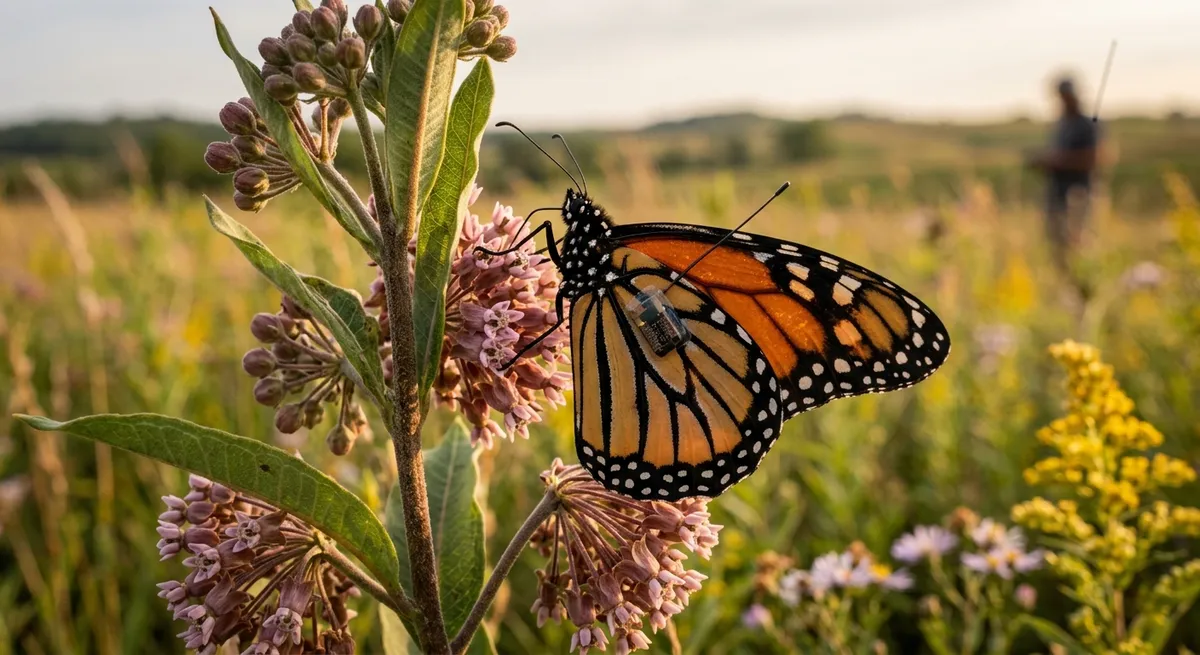
Every fall, monarch butterflies embark on a remarkable migration from North America to Mexico, fueled by nectar from Iowa's vibrant wildflowers. However, the pathways they take and the challenges they face remain a mystery. Iowa State researchers are now utilizing cutting-edge BlūMorpho tracking tags — the lightest available — to follow 100 monarchs on their journey. This study aims to fill critical knowledge gaps regarding their migration behavior and the influence of weather on their travels.
Understanding Monarch Migration and the Decline
The eastern North American monarch population has seen a staggering decline of up to 80% in recent years. Iowa plays a vital role in this ecosystem, as many monarchs that overwinter in Mexico originate from the Midwest. The research not only focuses on tracking their paths but also compares monarchs raised under different conditions—those born in controlled environments versus wild-caught butterflies. This vital information could help clarify whether the conditions they grow up in affect their survival rates and navigational abilities.
The Technology Behind the Study
The adoption of Bluetooth-enabled tracking tags is revolutionizing how researchers study insect migration. Unlike traditional wing-decal methods, which were often cumbersome and inefficient, BlūMorpho tags are lightweight and allow for real-time tracking. This technology enables scientists to gather precise data about the migration routes of monarch butterflies in real time, providing insights that were previously unattainable. With this information, researchers can better understand how various factors impact the butterflies' eight-week journey and their overall survival.
Community Engagement in Conservation
One of the most exciting developments in this study is the potential for public involvement in monarch conservation efforts. The Project Monarch app empowers everyday people to engage with science actively. This initiative encourages citizens to participate in tracking efforts, enhancing the data collected and raising awareness about the importance of protecting these iconic creatures. By fostering a connection between communities and conservation, researchers hope to instill a greater appreciation for monarchs and their habitats.
Iowa's Role in Protecting Monarchs
Iowa's commitment to creating and maintaining habitats for monarch butterflies has been significant. Since 2015, more than 690,000 acres have been established for monarch conservation. This large-scale habitat restoration not only supports the butterfly population but also promotes biodiversity in the region. With continuing support and innovative projects like this, Iowa stands at the forefront of efforts to reverse the decline of monarchs.
The Science of Navigation
Another aspect of this study delves into the science behind monarch navigation. By employing advanced tracking methods, researchers will measure how weather conditions influence the monarchs' migratory decisions. Monarchs have long been recognized for their unique ability to navigate across vast distances, and understanding the factors that affect their journey will be crucial in developing effective conservation strategies going forward.
Conclusion
The combination of innovative technology, community involvement, and dedicated habitats is paving the way for more effective monarch conservation efforts. By following the butterflies with lightweight tracking tags, researchers hope to uncover the secrets of their migration and bolster efforts to protect these crucial pollinators. As you engage with this research, consider how each of us can contribute to saving an iconic species like the monarch butterfly.