In a fascinating glimpse into the past, a new study of Theban Tomb 209 near Luxor reveals how burial practices evolved over a span of 700 years, from the Twenty-fifth Dynasty to the Ptolemaic period. Researchers argue that what might seem like chaotic arrangements of multiple burials actually reflect a sophisticated and evolving funerary memory, showcasing how ancient Egyptians adapted their rituals around earlier interments.
The Changing Landscape of Burial Practices
The findings challenge a long-held assumption that the reuse of ancient tombs led to a haphazard mess over time. Instead, the evolving nature of these burial sites indicates careful planning and cultural continuity. The study highlights how tombs were not merely abandoned but rather transformed spaces, reflecting changes in rituals and social behaviors, as families and communities revisited and ‘edited’ their sacred spaces.
A Closer Look at Theban Tomb 209
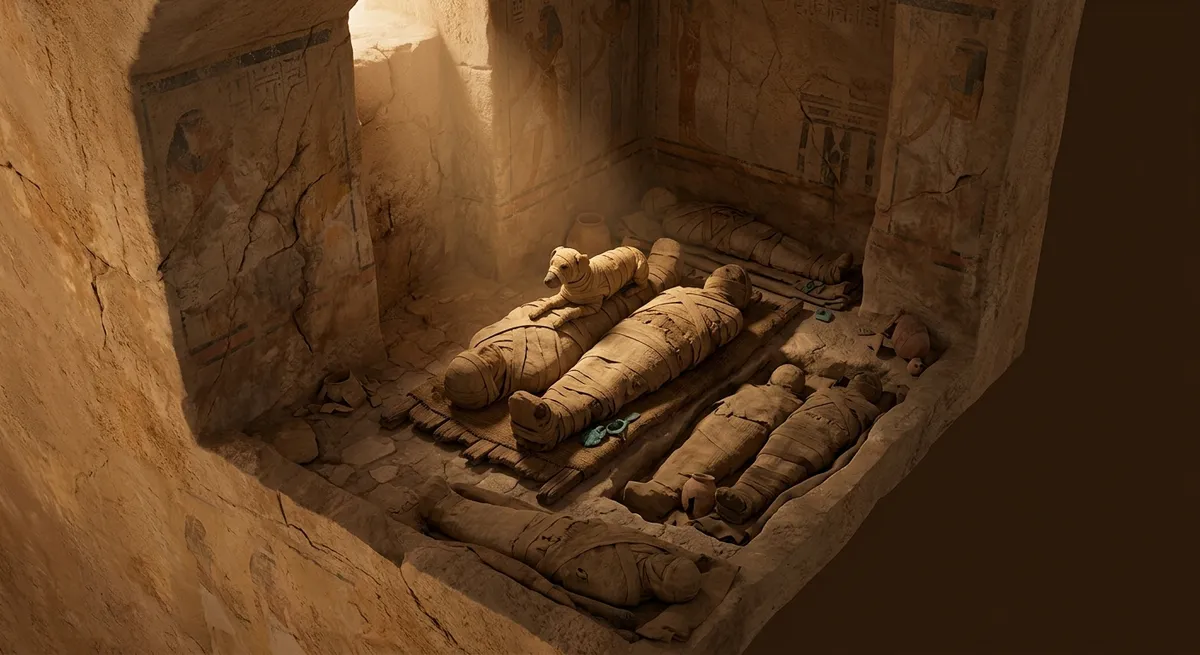
Theban Tomb 209 serves as a cornerstone for understanding these shifting practices. Initial burials within this tomb were straightforward, yet as time progressed, the chamber saw an increasing complexity in its use. Later burials included multiple remains, including a notable mummified dog placed above two human bodies. This intriguing addition serves as a poignant reminder of the human-animal connection in afterlife beliefs, shedding light on how pet burials were integral to expressions of love and companionship beyond death.
Funerary Memory: Tradition Meets Adaptation
The concept of funerary memory plays a crucial role in interpreting these findings. It suggests that rather than viewing the layering of burials as a result of neglect, they were a deliberate adaptation of traditions. As society evolved, so too did the rituals surrounding death and remembrance. Each burial not only honored the deceased but also recognized the previous occupants of the tomb, preserving the memory of their lives.
Cultural Impact of Burial Arrangements
The careful arrangement of remains within these ancient tombs reveals a lot about shifts in Egyptian religion, social status, and personal beliefs. For example, the placement of the mummified dog above humans may symbolize a belief in a guiding spirit, representing a companion providing passage to the afterlife. This reflects a nuanced understanding of death and companionship, deeply rooted in Egyptian culture.
Conclusion: Understanding Ancient Egyptian Life Through Burials
The study of Theban Tomb 209 not only enhances our understanding of ancient Egyptian burial practices but also invites us to rethink how we view the past. These tombs were more than just resting places; they were evolving sanctuaries of memory, encapsulating centuries of love, companionship, and tradition. By exploring how ancient Egyptians navigated the complexities of grief and remembrance through their burial practices, we gain insight into their social and spiritual lives—a legacy that continues to fascinate us today.